

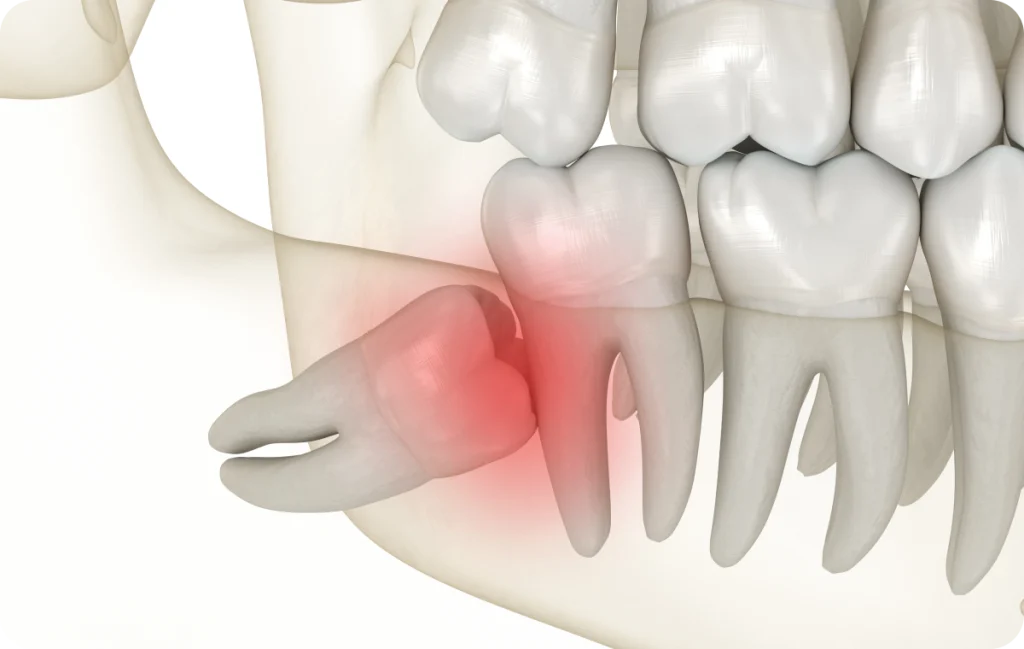
Wisdom teeth are the last permanent teeth to appear in the mouth. They are also called third molars and are located at the back of the jaws, both upper and lower. Their eruption most often occurs between the end of adolescence and the beginning of adulthood, generally between the ages of 17 and 25.
However, this timeline can vary depending on the individual. Some people see their wisdom teeth appear later, while others only develop some of them—or none at all.
These teeth can be functional when they are well positioned, but their development often requires careful monitoring.
What are wisdom teeth?
Wisdom teeth are an integral part of the permanent dentition. There are up to four of them—two in the upper jaw and two in the lower jaw. Their name refers to the age at which they appear, a period traditionally associated with a certain level of maturity.
From an anatomical perspective, they are similar to other molars and can contribute to chewing when there is enough space. However, due to the evolution of human jaws, their eruption can sometimes occur under less favorable conditions.
Origin and development of wisdom teeth
An evolution linked to dietary history
Originally, wisdom teeth played an important role in chewing harder, less processed foods. Over time, eating habits have changed, and human jaws have gradually become smaller.
This evolution explains why the available space is now sometimes insufficient to accommodate these additional teeth. As a result, wisdom teeth may encounter obstacles during their eruption, which justifies special attention.
Variability among individuals
Each person experiences a different development of their wisdom teeth. Some may emerge without causing discomfort, while others remain partially erupted or fully impacted within the bone. It is also possible for one or more wisdom teeth to be absent, which is a completely normal anatomical variation. This diversity makes individualized assessment necessary in order to adapt monitoring to each situation.
At what age do wisdom teeth appear?
The absence of pain does not necessarily mean the absence of progression. This is why regular check-ups are important to monitor their position and development, even in the absence of symptoms.
The eruption of wisdom teeth most often occurs between the ages of 17 and 25. However, this age range is only indicative. In some patients, wisdom teeth may begin to appear earlier or, on the contrary, remain dormant for many years.
Common situations associated with wisdom teeth
- Lack of space in the dental arch
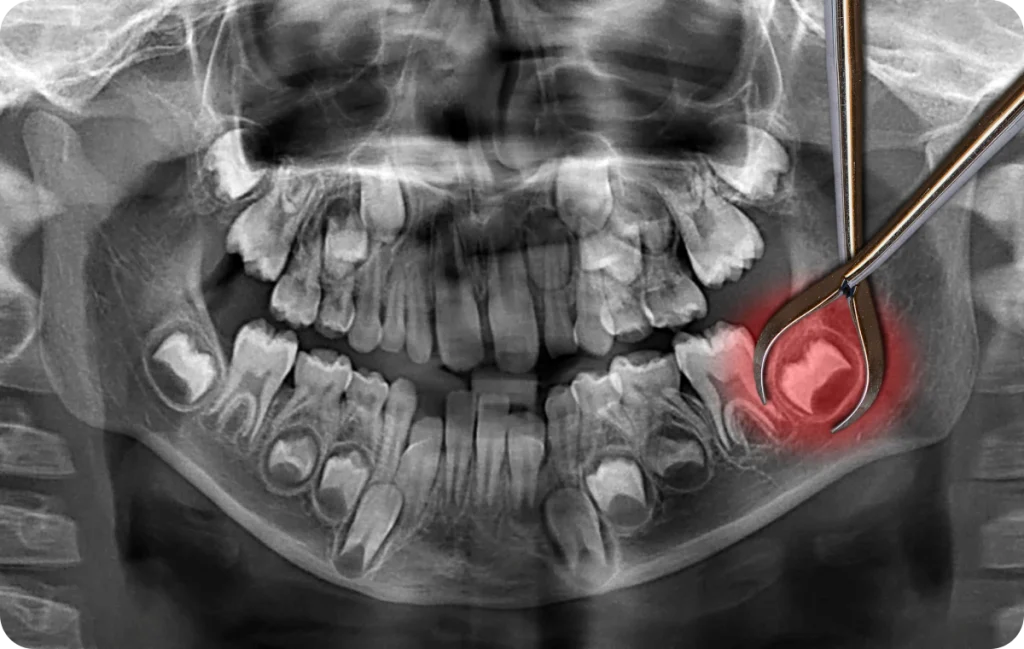
Lack of space is one of the most common situations. When the dental arch is already complete, the arrival of wisdom teeth may be compromised. They may then grow at an angle or remain trapped under the gum.
This situation can make cleaning difficult and promote the development of local inflammation. An evaluation helps determine whether simple monitoring is sufficient or if treatment should be considered.
- Partially erupted wisdom teeth
When a wisdom tooth only partially emerges, a portion of the gum may remain covering it. This situation promotes the accumulation of food debris and bacteria.
Local inflammation may then occur, accompanied by pain or discomfort when chewing. Particular attention to oral hygiene and appropriate monitoring can help limit these issues.
- Impacted wisdom teeth
An impacted wisdom tooth remains completely or partially enclosed within the jawbone. This situation can remain asymptomatic for a long time. However, an impacted tooth may sometimes exert pressure on neighboring teeth or be associated with changes in the surrounding tissues.
Radiographic examinations are essential to assess this situation and guide decisions regarding monitoring or treatment.
Symptoms that may be associated with wisdom teeth
Wisdom teeth can develop without causing any symptoms. However, certain signs may appear during their eruption or in cases of unfavorable positioning. Pain at the back of the jaw is often reported.
Swelling of the gums, a feeling of pressure, or difficulty opening the mouth may also occur. Sometimes, bad breath or an unpleasant taste may be noticed. These signs should lead to a consultation in order to identify the cause and adapt the appropriate follow-up.

Possible inflammation and infections
When oral hygiene around the wisdom teeth is difficult, local inflammation may occur. This inflammation, sometimes called pericoronitis, is characterized by pain, redness, and swelling of the gums.
In some cases, a more diffuse discomfort may be experienced. Early management helps relieve symptoms and prevent their worsening. Regular follow-up contributes to preventing these situations and maintaining good oral health.
Wisdom teeth and dental alignment
The question of the impact of wisdom teeth on dental alignment is often raised. When there is insufficient space, they may exert pressure on adjacent teeth.
This pressure may sometimes be associated with tooth movement. Although this relationship varies depending on the situation, monitoring is still recommended, particularly for patients who have undergone orthodontic treatment.
Comment évaluer les dents de sagesse ?
- Examen clinique
L’examen clinique permet d’observer la gencive, la position visible des dents et l’éventuelle présence de signes inflammatoires. Il constitue une première étape essentielle pour comprendre la situation et orienter les examens complémentaires.
- Dental imaging
Panoramic radiography is commonly used to evaluate wisdom teeth. It provides a global view of the jaws and allows for the analysis of the teeth’s position, orientation, and proximity to neighboring structures. This examination helps establish an accurate diagnosis and determine the course of action.
Monitoring or treatment: how to decide?
Not all wisdom teeth require specific treatment. When they are well positioned, functional, and easy to clean, simple monitoring may be sufficient.
However, repeated pain, inflammation, or risks to neighboring teeth may lead to considering an intervention. This decision is based on a personalized assessment, taking into account the patient’s age, symptoms, and overall context.
Hygiene and prevention for wisdom teeth
Rigorous hygiene plays a central role in preventing complications related to wisdom teeth. Brushing must be thorough, particularly at the back of the mouth.
Additional tools, such as interdental brushes, may be recommended to improve cleaning. Personalized advice helps you adopt the right habits and reduce the risk of inflammation or discomfort.
FAQ – Wisdom teeth
- At what age do wisdom teeth usually come in?
Wisdom teeth most often come in between ages 17 and 25, but eruption can vary from person to person. - Is it possible to never have wisdom teeth?
Yes, some people develop only some wisdom teeth or none at all, which is completely normal. - Can an impacted wisdom tooth remain symptom-free?
Yes, an impacted wisdom tooth can remain silent for a long time and be discovered during a routine X-ray exam. - Do wisdom teeth always cause pain?
No, they can develop without pain when they are well positioned and properly cared for. - Can simple monitoring be enough in some cases?
Yes, when wisdom teeth cause neither discomfort nor inflammation, regular follow-up may be sufficient.
Book an appointment for wisdom teeth follow-up
Regular follow-up helps anticipate issues related to wisdom teeth and respond appropriately. At the dental practice of Drs. Payam and Pegah Gandjizadeh in Cagnes-sur-Mer, each patient receives a careful assessment and clear explanations to understand their situation. To review your wisdom teeth or schedule a check-up, you can book an appointment online and be supported in a professional and caring setting.