

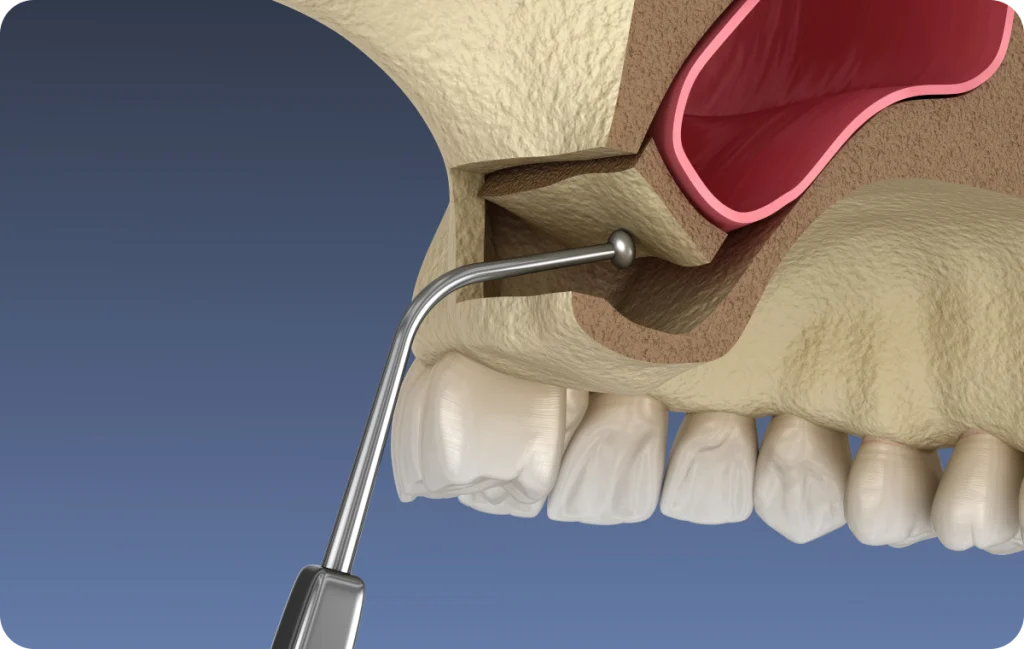
A sinus lift is a surgical procedure performed in dentistry to increase bone volume in the posterior part of the upper jaw. This area lies beneath the maxillary sinuses, which are air-filled cavities naturally present on either side of the nose.
When the bone is insufficient to allow placement of a dental implant under appropriate conditions, a sinus lift is a preliminary step aimed at recreating adequate bone support.
Over time, particularly after the loss of a tooth, the alveolar bone may gradually resorb. In addition, the maxillary sinus tends to expand downward, further reducing the available bone thickness. A sinus lift therefore consists of gently elevating the sinus membrane and filling the created space with a specific material to promote the formation of new bone.
Why might a sinus lift be necessary before an implant?
Placing a dental implant requires sufficient quantity and quality of bone to ensure its stability. In the upper jaw, and more particularly in the premolar and molar region, the bone is often thinner than in other areas. This anatomical characteristic explains why a sinus lift is sometimes indicated before an implant treatment plan.
Several situations can lead to insufficient bone: a past extraction, a previous dental infection, or time-related bone resorption. When the remaining bone height is too low, placing an implant directly could compromise its stability. A sinus lift then makes it possible to prepare the implant site under safer conditions.
Which patients is a sinus lift intended for?
A sinus lift is intended for patients for whom a dental implant is being considered in the posterior region of the upper jaw and in whom radiographic examination shows insufficient bone height. This indication is always based on an individualized assessment that takes the patient’s overall oral situation into account.
General health status, oral hygiene, and certain lifestyle habits are also taken into consideration. In some cases, adjustments to the treatment plan may be necessary in order to tailor care to the patient’s specific needs.
The different sinus lift techniques
Lateral approach sinus lift
A lateral approach sinus lift is indicated when the available bone height is very limited. This technique involves creating an access window on the side of the jaw to reach the maxillary sinus. The sinus membrane is then carefully elevated, and a grafting material is placed to recreate sufficient bone volume.
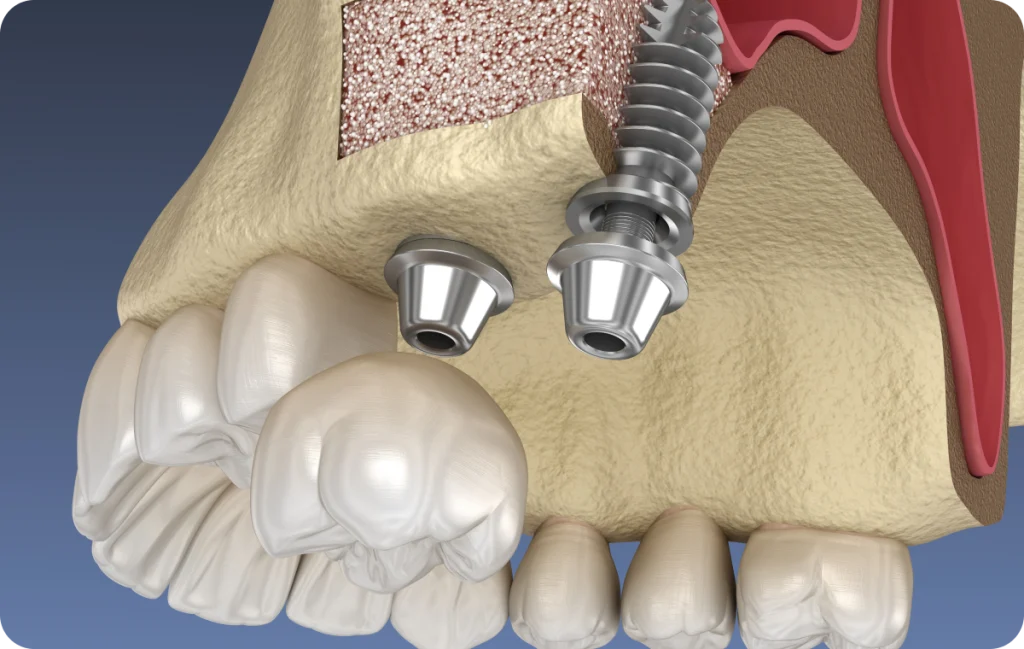
Depending on the clinical situation, implants may be placed during the same procedure or after a healing period. This choice mainly depends on the stability the bone can provide at the time of surgery.
Crestal approach sinus lift
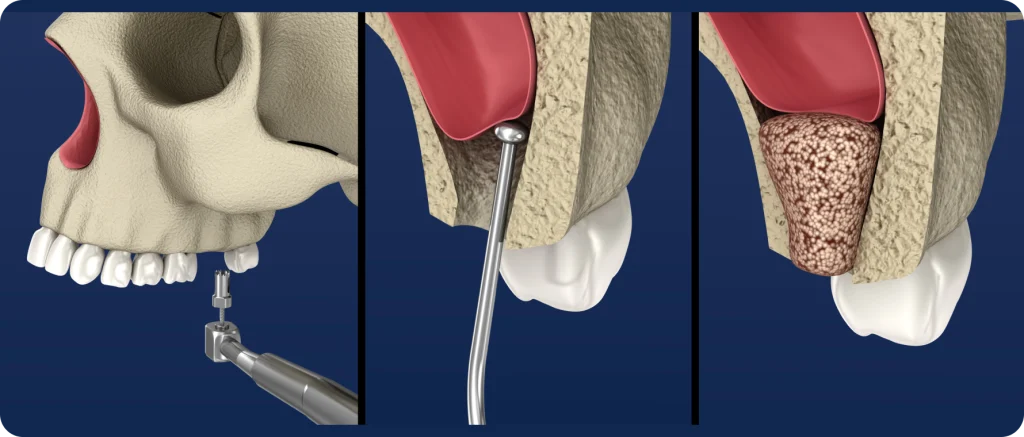
A crestal approach sinus lift is considered when bone loss is more moderate. Access is obtained directly through the implant site, without a significant lateral opening. This technique allows for a more limited elevation of the sinus membrane.
In some cases, it may allow simultaneous implant placement, thereby reducing the number of procedures. However, this approach requires a precise assessment to ensure appropriate conditions.
How a sinus lift is performed
Before the procedure, a clinical and radiological assessment is carried out. Imaging examinations make it possible to visualize bone height, the shape of the sinus, and surrounding anatomical structures. These elements are essential for planning the procedure rigorously.
A sinus lift is generally performed under local anesthesia. Once the area is numb, the practitioner accesses the sinus according to the chosen technique, elevates the sinus membrane, and then places the grafting material. The area is then closed with appropriate sutures. The duration of the procedure varies depending on the technique and the extent of the bone grafting.
Post-operative course and healing phase
After a sinus lift, a healing period is necessary to allow the integration of the filling material and the progressive formation of new bone. This phase can last several months, most often between four and nine months.
After-effects such as swelling, a feeling of tightness, or slight bruising may occur. These are generally temporary. Specific recommendations are provided to limit stress on the sinus and promote optimal healing. Regular follow-up makes it possible to monitor the healing site before proceeding with implant treatment.

Materials used during a sinus lift
Different types of materials may be used for bone grafting during a sinus lift. Their role is to provide a scaffold for bone regeneration. Over time, these materials are progressively integrated and replaced by newly formed bone.
The choice of material depends on several criteria, including the clinical situation and the selected therapeutic strategy. The objective remains to create an environment conducive to the future stability of the dental implant.
Precautions to follow after a sinus lift
After the procedure, certain precautions are important to protect the operated area. In particular, it is recommended to avoid blowing your nose forcefully or creating excessive pressure in the sinuses. These measures help preserve the sinus membrane during the healing phase.
Careful oral hygiene is also essential. Check-ups are scheduled to ensure healing is progressing properly and to adjust follow-up if necessary.
Sinus lift and the overall implant plan
A sinus lift is part of a comprehensive approach to replacing missing teeth. This preparatory step aims to recreate anatomical conditions suitable for placing dental implants, while respecting each patient’s specific constraints.
The implant plan is developed progressively, with clear information at each stage. This approach enables the patient to understand the different phases of the treatment and to commit to it with full knowledge.
FAQ – Sinus lift
- Is a sinus lift painful?
The procedure is performed under local anesthesia, which limits sensations during the surgery. The post-operative period is generally well managed with appropriate follow-up. - How long should one wait before placing the implant?
The timeframe depends on the technique used and on bone healing. It may range from a few months to several months depending on the situation. - Can the implant be placed at the same time as the sinus lift?
In some cases, simultaneous placement is possible. This decision is based on an assessment of bone height and the stability achieved. - Does a sinus lift pose any risks to the sinus?
When the procedure is correctly indicated and properly monitored, it is carried out under controlled conditions. Regular follow-up helps monitor progress. - Is a sinus lift always required before an upper implant?
No, it is indicated only when bone height is insufficient. A radiological assessment makes it possible to determine whether it is necessary.
Make an appointment for a personalized assessment
If you are considering implant treatment and the question of a sinus lift arises, a consultation will allow us to precisely evaluate your situation and discuss the different possible steps. Dr. Payam Gandjizadeh’s Dental Practice, dentist in Cagnes-sur-Mer, welcomes you to support you in this process and answer your questions. You can now make an appointment online to benefit from personalized advice and build your treatment plan with complete peace of mind.