

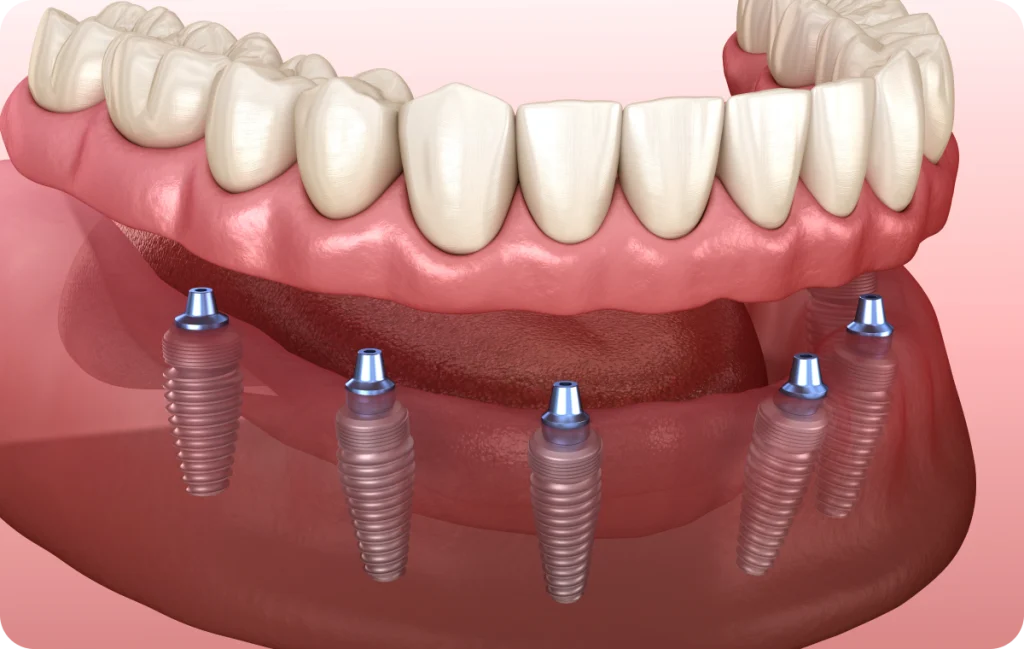
All-on-4 / All-on-6 is a dental replacement approach intended for patients with complete or nearly complete edentulism. Specifically, this technique relies on the placement of a fixed prosthesis supported by dental implants, most often four or six in number, strategically positioned in the jawbone.
Thus, the objective is to restore stable masticatory function while ensuring a harmonious aesthetic result, consistent with facial morphology.
Unlike removable dentures, which are taken out daily, All-on-4 / All-on-6 is based on a fixed, solidly anchored foundation. The implants act as support points for a complete prosthetic arch, custom-designed for each patient. Therefore, this solution is primarily intended for individuals whose natural teeth can no longer be preserved or have already been extracted.
Who is All-on-4 / All-on-6 for?
All-on-4 / All-on-6 can be considered for adult patients with significant tooth loss, whether long-standing or more recent. This solution is therefore suitable for individuals already wearing complete removable dentures as well as those suffering from severely damaged, mobile, or painful teeth. Furthermore, in certain situations, it may be proposed following the failure of previous conservative or prosthetic treatments.
However, each situation remains unique and requires a personalized evaluation. In practice, general health status, bone quality, oral hygiene, and lifestyle habits are systematically taken into account before any therapeutic decision. This is why a thorough clinical examination, supplemented by imaging tests, allows for the assessment of the project’s feasibility and guides the choice between an All-on-4 or All-on-6 solution.
Differences between All-on-4 and All-on-6
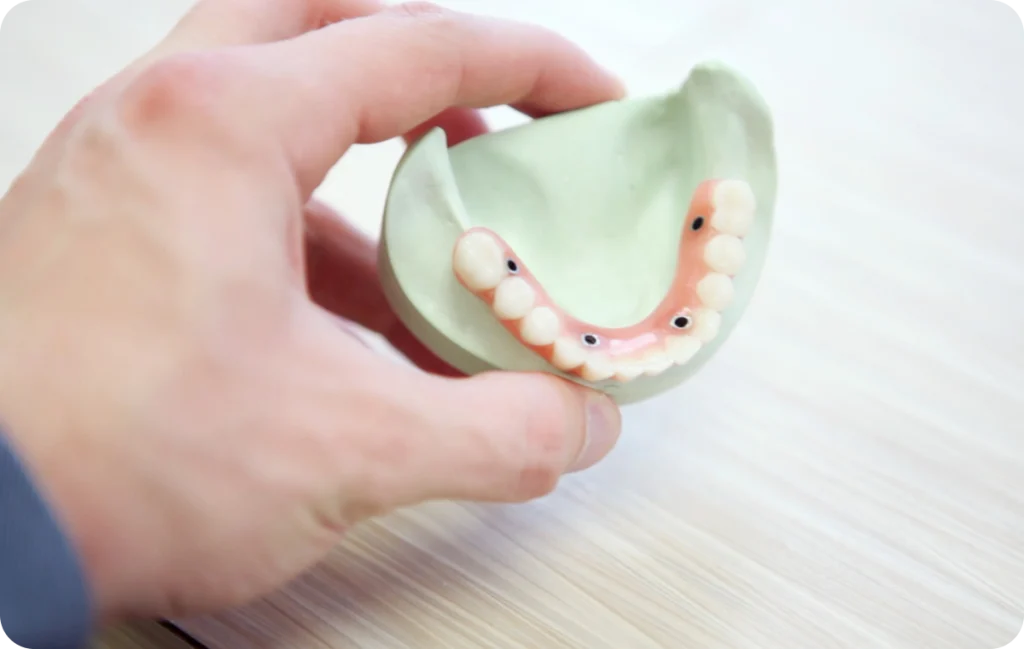
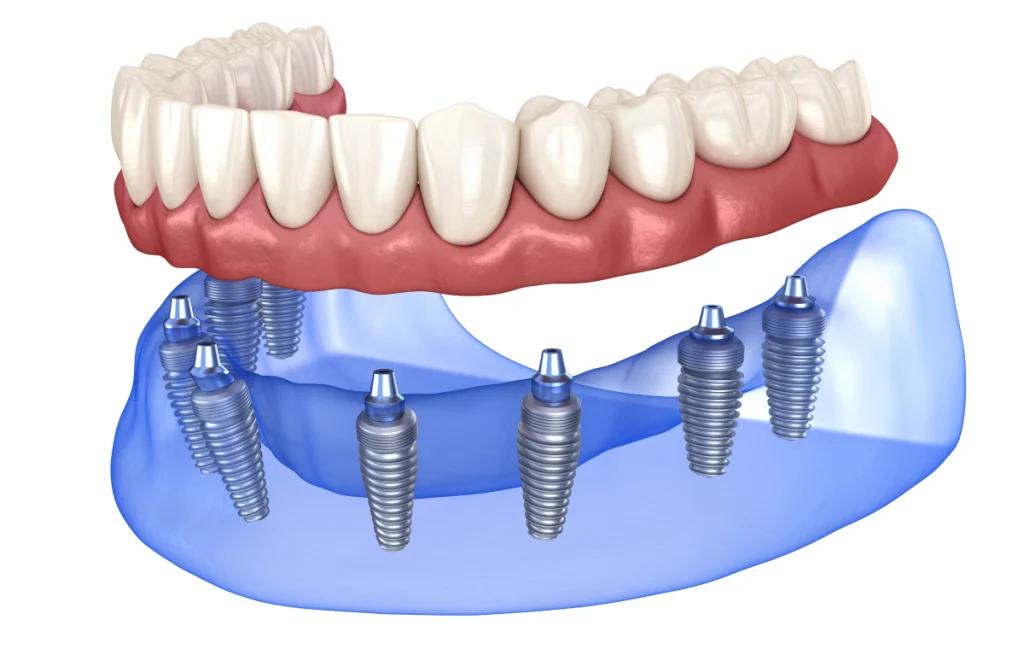
The main difference between All-on-4 and All-on-6 lies in the number of implants used to support the complete prosthesis. In the All-on-4 technique, four implants are positioned, two of which are often angled posterior implants to optimize bone anchorage. This configuration can, in some cases, avoid additional procedures.
All-on-6, on the other hand, relies on six implants distributed across the arch. This option can be considered when bone volume allows and when the clinical situation requires a different distribution of forces.
Stages of All-on-4 / All-on-6 Treatment
Initial Assessment and Planning
Treatment begins with a thorough consultation, essential for proper patient care. During this first appointment, the practitioner performs a complete clinical examination, analyzes expressed expectations, and prescribes appropriate radiological examinations. This step allows for the establishment of a precise treatment plan, integrating both implant positioning and the type of prosthesis envisioned.
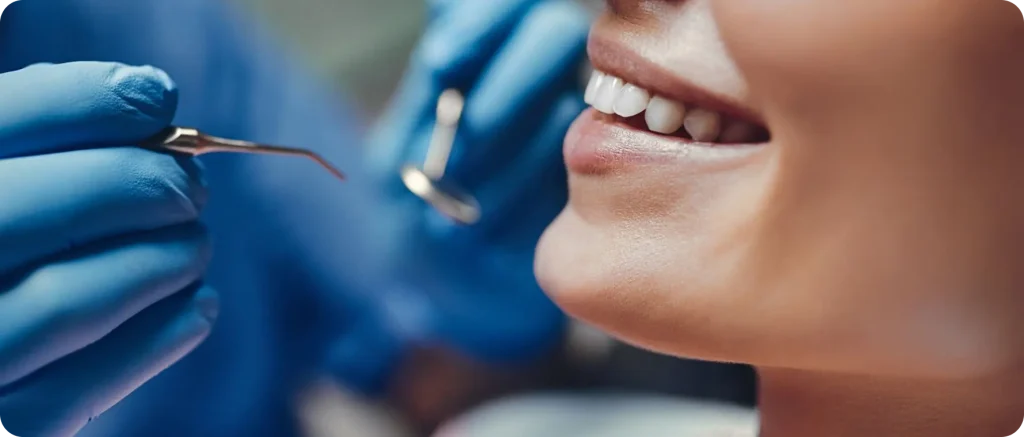
Subsequently, the planning phase plays a central role in the success of the treatment. It allows for anticipating each step of the protocol, limiting unforeseen events, and adapting care to each patient’s specific anatomical constraints. Thus, this personalized approach helps secure the treatment and optimize its functional and aesthetic outcome.
The Surgical Phase
Implant placement is a key step in the All-on-4 / All-on-6 protocol. It is generally performed under local anesthesia, sometimes combined with sedation as needed. The implants are inserted into the jawbone, following the plan established during the preparation phase.
In certain situations, a temporary fixed prosthesis can be placed soon after the procedure. It allows the patient to regain masticatory function and a harmonious smile during the healing phase.
The Healing and Adaptation Period
After implant placement, a healing period is necessary to allow for their integration into the bone. This phase, called osseointegration, extends over several weeks to a few months depending on the case. During this period, regular check-ups are performed to ensure the proper progression of the process.
The patient also receives adapted hygiene and dietary instructions. These recommendations help promote optimal healing and limit complications.
Placement of the Definitive Prosthesis
Once healing is complete, the definitive prosthesis is designed and adjusted. It is custom-made, taking into account aesthetics, phonation, and masticatory function. The practitioner makes precise adjustments to ensure lasting comfort and harmonious integration into the oral cavity.
This step marks the finalization of the All-on-4 / All-on-6 treatment and allows the patient to regain fixed and functional dentition.
Maintenance and Follow-up after All-on-4 / All-on-6
Follow-up is an essential element after the placement of an All-on-4 / All-on-6. Although implants are not subject to cavities, the tissues surrounding them require special attention. Rigorous oral hygiene remains indispensable for preserving gum health and implant stability.
Regular check-up consultations allow for monitoring the condition of the implants, prosthesis, and surrounding tissues. These appointments also provide an opportunity for professional cleanings and, if necessary, adjustments to certain prosthetic elements.
Sensations and Daily Adaptation
After the placement of an All-on-4 / All-on-6, an adaptation period is often observed. The patient may experience new sensations related to the presence of the fixed prosthesis. Mastication, speech, and smile gradually evolve as adaptation occurs.
Over time, the majority of patients regain a feeling of stability and daily comfort. Regular communication with the practitioner allows for addressing any discomfort and providing appropriate solutions.
Aesthetic and Functional Aspects
All-on-4 / All-on-6 aims to restore not only masticatory function but also the aesthetic balance of the face. Tooth loss can lead to sagging features and a change in smile. The complete prosthesis helps support the lips and restore a more harmonious facial expression.
Functionally, this solution contributes to more efficient chewing compared to traditional removable dentures. It also promotes better stability during speech and social interactions.
Frequently Asked Questions about All-on-4 / All-on-6
- How long does an All-on-4 / All-on-6 treatment take?
The duration of treatment depends on the patient’s oral health situation. Implant placement can be performed in one session, followed by a healing period before the definitive prosthesis is placed. - Is implant placement painful?
Implant placement is performed under local anesthesia, which limits sensations during the procedure. After the session, temporary discomfort may occur, usually well-controlled by appropriate measures. - Can one eat normally after the prosthesis is placed?
A soft diet is recommended in the first few weeks following the procedure. Gradually, chewing improves, allowing for a more varied diet. - What is the lifespan of an All-on-4 / All-on-6 prosthesis?
The longevity of the prosthesis depends on oral hygiene and regular follow-up. Check-ups ensure its stability and allow for adjustments if necessary. - Is All-on-4 / All-on-6 suitable for all jaws?
This solution is not indicated in all situations. A clinical and radiological assessment determines if this type of treatment is appropriate. - What follow-up is necessary after treatment?
Regular check-up consultations are essential after placement. They allow for monitoring the implants, prosthesis, and gum condition.
Make an appointment for an All-on-4 / All-on-6 project with the dentist in Cagnes-sur-Mer
Each dental replacement project deserves a personalized evaluation. If you wish to obtain information adapted to your situation and consider an All-on-4 / All-on-6 treatment, it is possible to make an appointment online at Dr. Payam Gandjizadeh’s Dental Practice in Cagnes-sur-Mer. A consultation allows for discussion of your expectations, a complete assessment, and support at every stage of your care.