

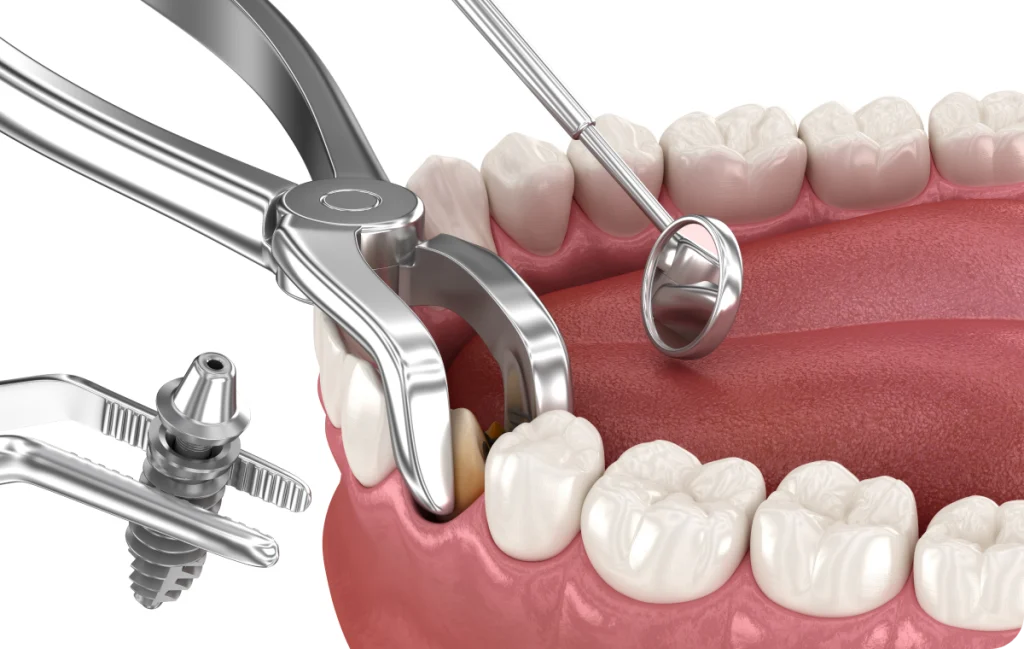
Immediate extraction/implant placement refers to a treatment approach that involves removing a tooth and placing, during the same surgical procedure, an artificial root intended to replace the missing tooth. This approach is carried out within a precise medical framework and is based on a rigorous assessment of the patient’s clinical situation.
Unlike a delayed approach, where a healing period is observed after extraction, this method aims to limit the time between tooth loss and the implant phase.
However, it is not a systematic solution. Each situation must be analysed individually to respect the biological balance of the tissues and the patient’s safety.
In which cases can this approach be considered?
Relevant clinical situations
Immediate extraction/implant placement may be considered when the tooth concerned has irreversible damage, such as a deep fracture, significant coronal destruction, or certain localised infections. The absence of excessive mobility and the ability to control the infectious environment are determining factors.
This approach may also be discussed when a tooth can no longer be preserved despite treatment, but the surrounding bone structures remain suitable for receiving an artificial root.
Bone and gingival criteria
Bone quality and volume are essential. Stable anchorage requires sufficient bone height and density. The gum is also assessed carefully, as its thickness and position influence healing and long-term tissue stability.
When these conditions are not met, a multi-stage approach may be preferred in order to respect biological constraints.
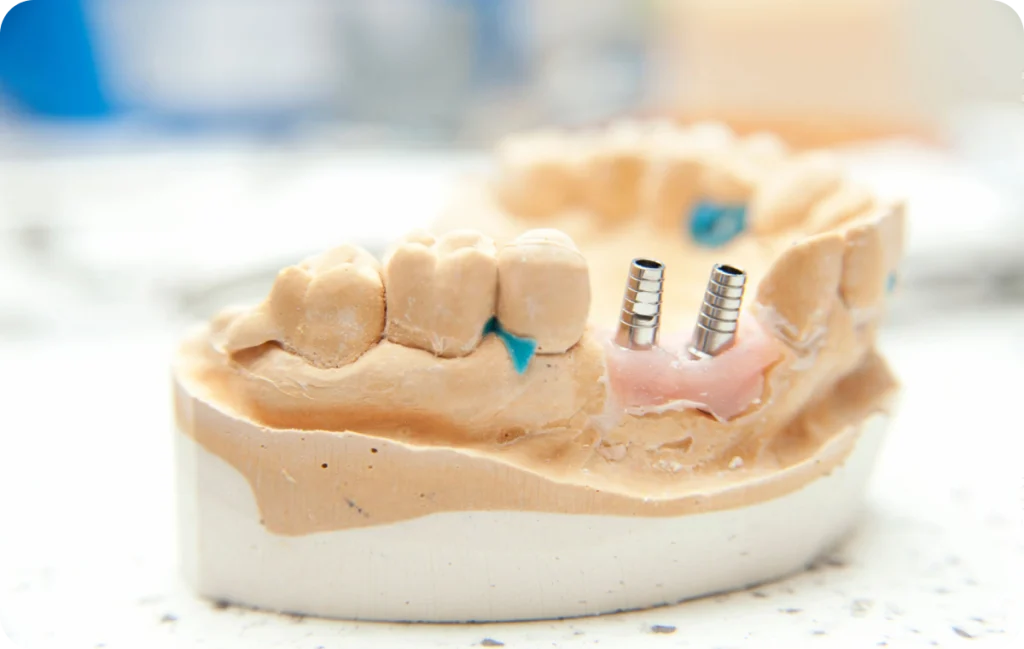
Preliminary assessment and planning phase
Comprehensive clinical examination
Before any decision is made, a complete oral and dental examination is carried out. It makes it possible to analyse the condition of the tooth concerned, neighbouring teeth, occlusion, and oral hygiene. These elements contribute to developing an appropriate treatment plan.
The patient’s general health status is also taken into account. Certain conditions or medical treatments may influence healing and guide the therapeutic strategy.
Imaging and site analysis
Imaging examinations, often three-dimensional, are used to visualise bone anatomy precisely. They help identify the position of sensitive structures and anticipate the insertion axis of the artificial root.
This planning phase helps to secure the procedure and limit intraoperative uncertainties.
How the procedure is carried out
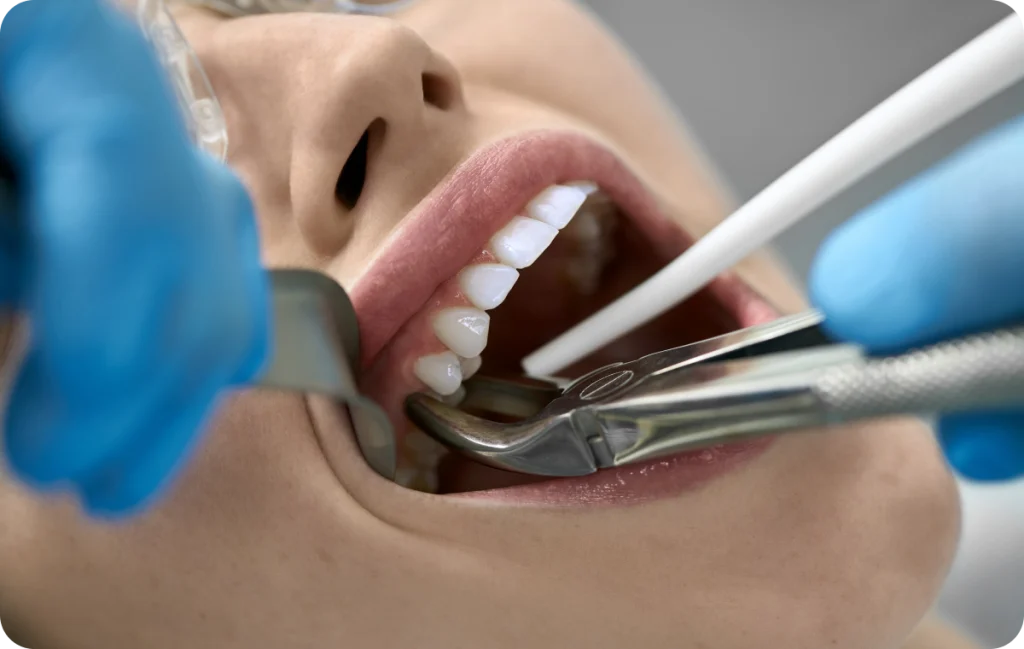
Tooth extraction
The procedure begins with removal of the tooth concerned. This extraction is performed carefully in order to preserve the bone and gum as much as possible. An atraumatic technique helps limit tissue loss and prepares the site for the next steps of treatment.
Once the tooth has been removed, the site is carefully cleaned to eliminate inflamed or infected tissues.
Placement of the artificial root
After extraction, the artificial root is positioned in the bone according to the axis defined during planning. Its initial stability is an essential factor for the remainder of the treatment.
In some cases, bone grafting may be performed to support the tissues and optimise healing. The entire procedure is carried out under local anaesthesia, under strict aseptic conditions.
Tissue management after the procedure
Bone healing
After the procedure, the bone begins a phase of progressive healing around the artificial root. This process, called osseointegration, enables stable fixation over time. Its duration varies depending on the clinical situation and the patient’s individual characteristics.
During this period, following post-operative instructions plays a central role in ensuring proper healing.
Balance of gingival tissues
The gum helps protect the treated site. Particular attention is paid to its adaptation and maintenance around the future replacement tooth. Harmonious healing contributes to long-term comfort and hygiene.
Post-operative course and recommendations
The days following the procedure
After immediate extraction/implant placement, moderate discomfort may occur. It is generally temporary and well controlled by the recommendations provided. An appropriate diet and rigorous oral hygiene are advised during the first few days.
Treatments may be prescribed if necessary to support healing and limit inflammatory risks.
Follow-up and check-ups
Follow-up appointments allow for checking the site’s evolution and the proper integration of the artificial root. This monitoring is essential to adapt care and anticipate any potential complications.
Placement of the replacement tooth
The definitive replacement tooth is generally made after the bone integration phase. This timeframe helps ensure satisfactory stability before the final restoration.
Its design takes into account morphology, shade, and the overall balance of the dentition. The aim is to achieve harmonious chewing function and lasting comfort.
Difference from a delayed approach
In a delayed approach, extraction is followed by a healing period before the implant phase. This strategy may be preferable when the site presents significant bone or inflammatory defects.
Immediate extraction/implant placement aims to reduce the number of steps, but it requires favourable local conditions. The choice between these two options is based on an individualised medical assessment.
Importance of long-term follow-up
Regular follow-up is essential to maintain tissue balance and the stability of the implant solution. It makes it possible to monitor the condition of the gum, bone, and replacement tooth over time.
These check-ups are part of an overall oral health approach and help prevent complications.
FAQ – Immediate extraction/implant placement
- Is this approach possible for all patients?
No, it depends on specific clinical criteria assessed during the preliminary evaluation. - Is the procedure painful?
It is performed under local anaesthesia. The after-effects are generally moderate and temporary. - How long before the definitive tooth?
The timeframe varies depending on bone healing, generally from several weeks to a few months. - Can a normal diet be resumed quickly?
An appropriate diet is recommended during the first few days, according to the instructions provided. - Is long-term follow-up necessary?
Yes, regular check-ups are essential for stability and tissue health.
Make an appointment for a personalized assessment
Dr. Payam Gandjizadeh’s dental practice in Cagnes-sur-Mer assists you in analyzing your situation and implementing appropriate care, including immediate extraction/implant placement when conditions allow. To receive personalized advice and ask your questions, you can book an appointment online for an in-depth discussion tailored to your needs.