

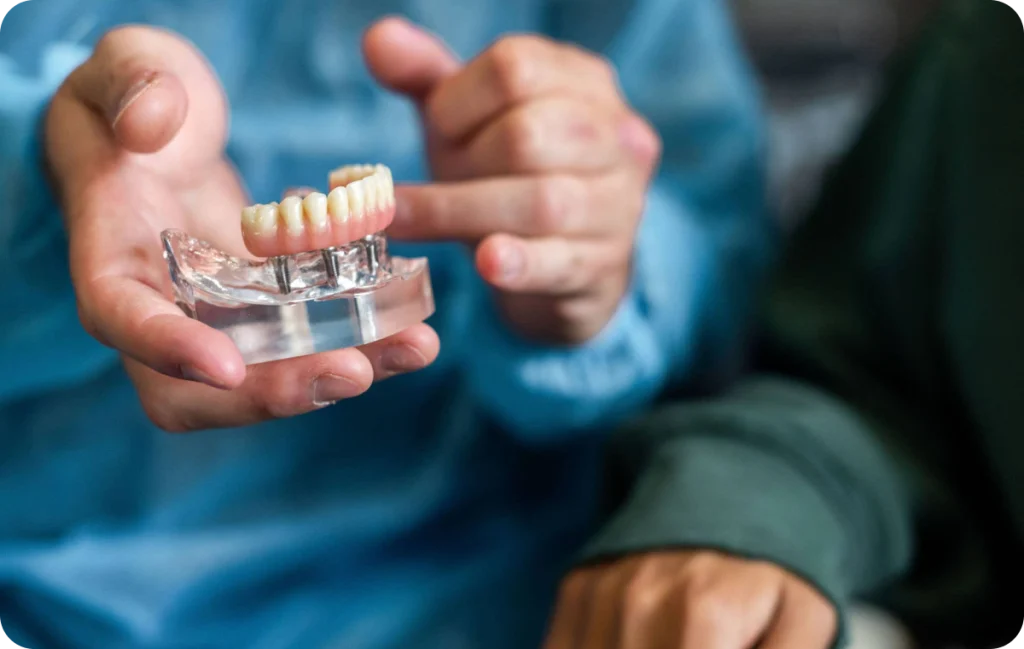
The removable implant-supported denture is a dental device designed to replace several missing teeth, or even all the teeth in a jaw. It differs from a conventional removable denture in its retention method.
Indeed, it does not rest solely on the gum, but anchors onto dental implants previously inserted into the jawbone. This solution combines two principles. On one hand, the implants serve as a stable support.
On the other hand, the denture remains removable, which means the patient can remove it for cleaning. The objective is to improve retention in the mouth, functional comfort, and daily quality of life, while maintaining simplified oral hygiene.
In which situations should a removable implant-supported denture be considered?
The removable implant-supported denture may be recommended when tooth loss causes functional discomfort or instability with a conventional denture. It applies to both partial and complete edentulism, particularly when the denture tends to move during chewing or speaking.
It may also be considered when bone volume allows the placement of a limited number of implants, without resorting to a fully fixed solution. Each indication is based on precise clinical analysis, taking into account the condition of the gum, bone, patient habits, and functional expectations.
Operating Principle of the Removable Implant-Supported Denture
The Role of Dental Implants
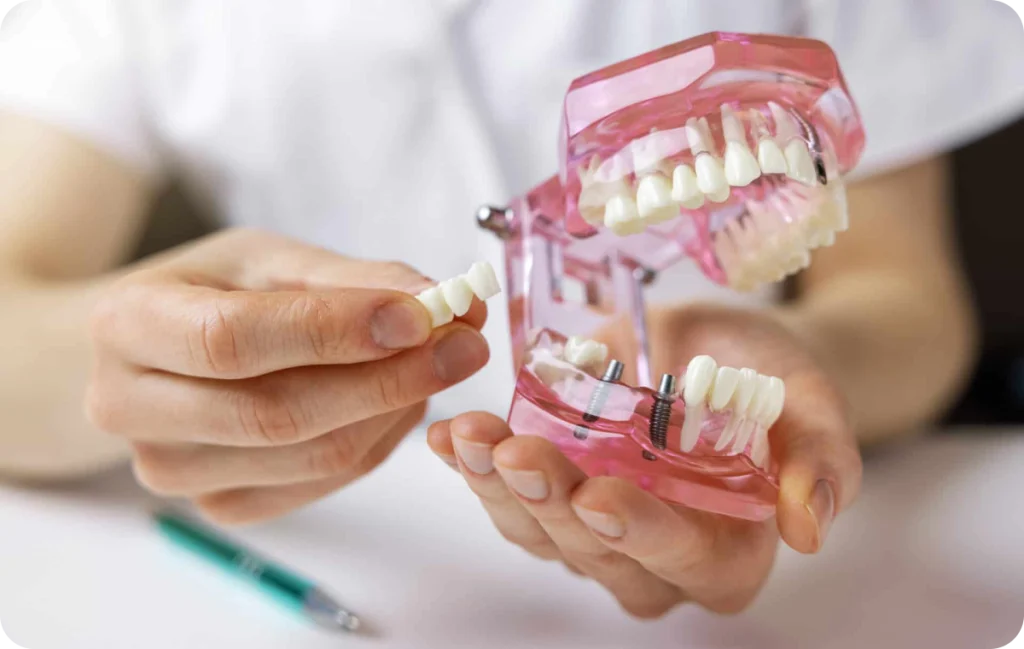
Dental implants are inserted into the jawbone to serve as anchor points. They replace the roots of missing teeth and provide a stable base for the denture. After placement, a healing period is necessary to allow their osseointegration.
Once this phase is complete, the implants can receive attachment systems adapted to the removable denture. Their position is determined to distribute chewing forces in a balanced manner.
Denture Retention Systems
Several systems can be used to ensure the stability of a removable implant-supported denture. These may include snap-button type attachments, support bars, or other retention devices. The choice depends on the clinical situation and the type of denture being considered.
These systems allow the denture to remain securely in place while maintaining its removable nature. They limit unwanted movements and reduce compression zones on the gum.
Placement Stages
Assessment and Treatment Plan
The first stage is based on a complete oral examination. This includes a clinical evaluation, radiological examinations, and, if necessary, three-dimensional analysis. This phase allows assessment of bone quality and determination of treatment feasibility.
A personalized treatment plan is then established. It specifies the number of implants, their position, and the type of removable implant-supported denture suited to the situation.
Implant Placement and Healing
Implant placement is performed under local anesthesia. It is followed by a healing phase during which the implant gradually integrates with the bone. This period varies depending on the patient and the treated area.
During this time, a temporary solution may be offered to maintain satisfactory function and aesthetics.
Design of the Definitive Denture
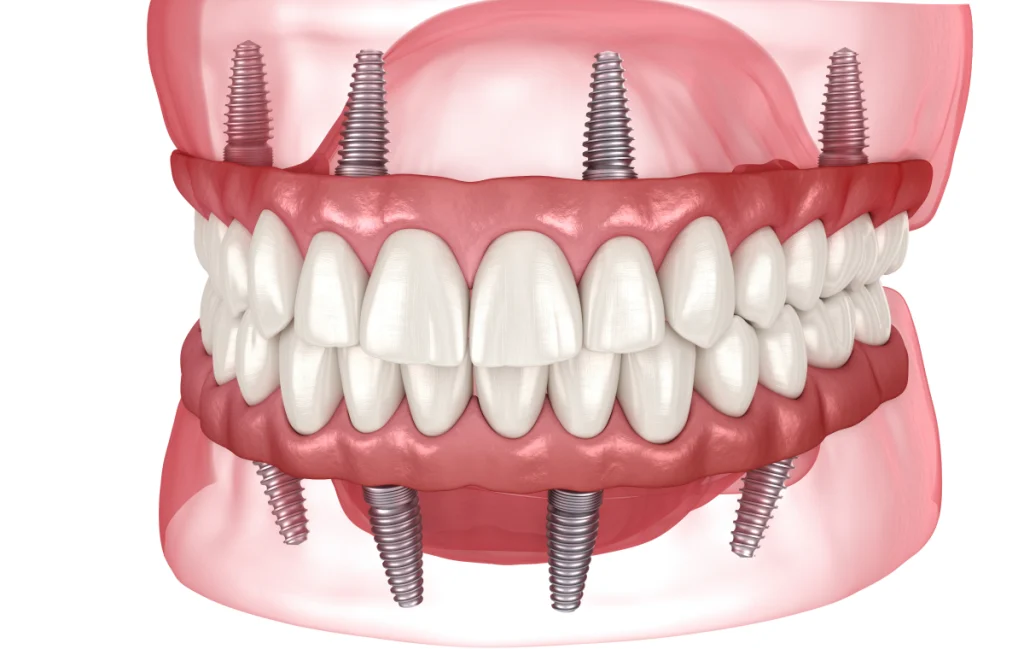
Once healing is complete, the removable implant-supported denture is custom-made. Several appointments may be necessary to adjust the shape, occlusion, and comfort. The objective is to obtain a stable, functional denture that is easy to handle.
Comfort and Daily Adaptation
The removable implant-supported denture aims to provide better stability compared to traditional removable appliances. This stability contributes to more efficient chewing and more natural speech. It also limits sensations of slipping or discomfort during meals.
An adaptation period remains necessary, however. It allows the patient to become accustomed to wearing the denture and to acquire the proper techniques for inserting and removing it independently.
Maintenance and Long-Term Follow-Up
Daily Hygiene
Maintenance of a removable implant-supported denture relies on rigorous and regular cleaning. It is recommended to remove the denture to brush it with appropriate products. The areas around the implants must also be cleaned carefully to preserve the health of the surrounding tissues.
This daily routine contributes to the durability of the denture and the maintenance of good oral health.

Importance of Regular Check-Ups
Regular follow-up allows verification of the condition of the implants, attachment systems, and the denture itself. Over time, certain retention elements may wear and require adjustment. Check-up visits allow these situations to be anticipated and good comfort of use to be maintained.
Differences from a Conventional Removable Denture
The conventional removable denture rests primarily on the gum and, sometimes, on remaining teeth. It may be less stable and cause displacement during chewing.
Conversely, the removable implant-supported denture benefits from bone anchorage through the implants. This difference improves retention in the mouth and reduces stress on the gum, while maintaining the ability to remove the denture for maintenance.
FAQ – Removable Implant-Supported Denture
- Is the removable implant-supported denture comfortable for daily use?
After an adaptation phase, the majority of patients report a sensation of increased stability compared to a conventional denture. - How many implants are necessary?
The number of implants depends on the jaw concerned and the clinical situation. Generally, two to four implants may be sufficient to stabilize a complete denture. - Can the denture be removed easily?
Yes, it is designed to be removed by the patient, particularly for daily cleaning. - Is this a durable solution?
Durability depends on maintenance, follow-up, and patient habits. Regular check-ups play an essential role.
Schedule your appointment at Dr Gandjizadeh’s Dental Office in Cagnes-sur-Mer
If you would like to know whether the removable implant-supported denture may suit your situation, you can schedule an appointment online at Dr Payam Gandjizadeh’s Dental Office in Cagnes-sur-Mer. A consultation will allow us to assess your situation and consider an appropriate treatment plan, in a reassuring and professional setting.