

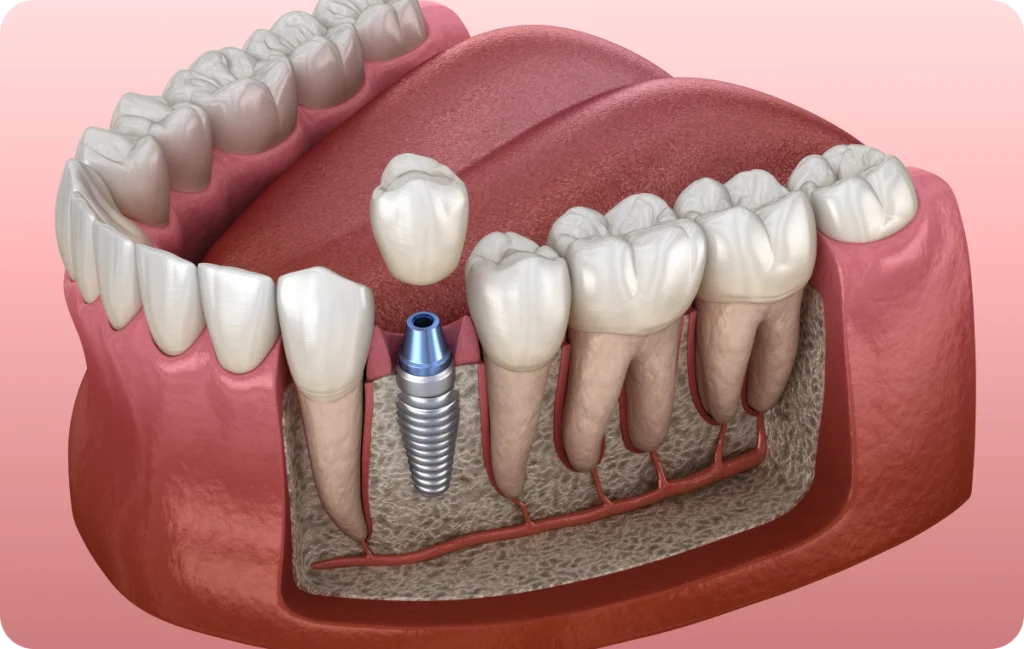
A single tooth implant is a solution used in dentistry to replace a missing tooth, whether it is an incisor, a premolar, or a molar. It involves placing an artificial titanium root in the jawbone, onto which a crown is then fixed.
This approach aims to restore masticatory function, occlusal balance, and smile harmony, while respecting adjacent tissues.
A single tooth implant is a solution used in dentistry to replace a missing tooth, whether it is an incisor, a premolar, or a molar. It involves placing an artificial titanium root in the jawbone, onto which a crown is then fixed. This approach aims to restore masticatory function, occlusal balance, and smile harmony, while respecting adjacent tissues. The single tooth implant thus allows for the replacement of a missing tooth without relying on adjacent teeth, unlike certain prosthetic alternatives.
What is a Single Tooth Implant used for?
A single tooth implant is mainly composed of three distinct elements. First, the implant itself, usually made of titanium, is inserted into the alveolar bone to act as an artificial root. Then, a prosthetic abutment connects the implant to the crown.
Finally, the custom-made dental crown reproduces the shape, color, and function of a natural tooth. The assembly forms a fixed restoration, designed to integrate durably into the oral cavity.
This solution helps maintain the stability of the dental arch. Indeed, an unreplaced missing tooth can lead to a gradual shifting of adjacent teeth and a change in occlusion. The single tooth implant also contributes to the preservation of the jawbone, thanks to the mechanical stimulation transmitted during chewing.
When to consider a Single Tooth Implant
A single tooth implant can be considered after the loss of an isolated tooth, whether recent or old. It is often proposed when adjacent teeth are healthy and do not require specific treatment. This solution then avoids modifying these teeth, unlike certain alternative fixed restorations.
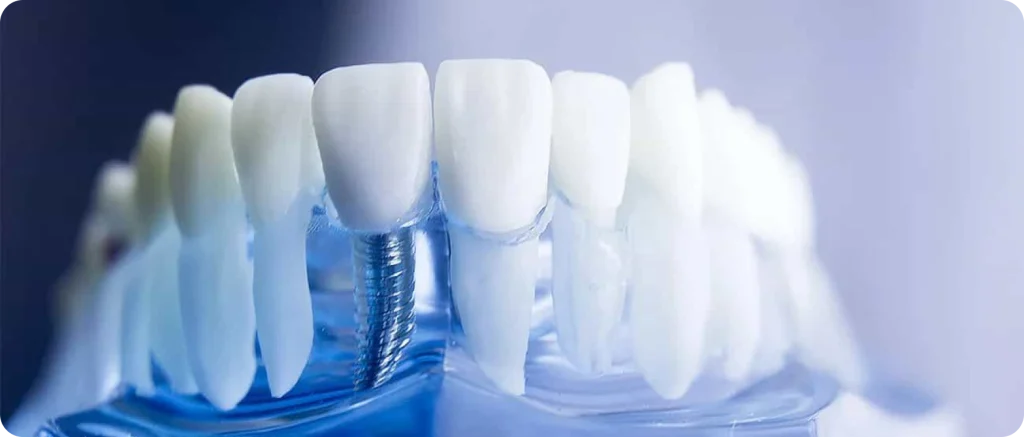
However, certain conditions must be met. Sufficient bone quantity, healthy gums, and satisfactory oral hygiene are necessary to consider placing a single tooth implant. In the presence of inflammation, infection, or significant bone loss, preliminary care may be indicated to create a favorable environment for treatment.
Steps of Single Tooth Implant Treatment
Consultation and Planning
The first step of single tooth implant treatment consists of a thorough consultation. This includes a clinical examination, X-rays, and, if necessary, a three-dimensional examination. These elements allow for a precise analysis of the bone anatomy, the position of adjacent teeth, and occlusal constraints. A personalized treatment plan is then established.
Placement of the Single Tooth Implant
The placement of the single tooth implant is performed under local anesthesia. The practitioner inserts the implant into the bone according to a controlled procedure adapted to each situation. The intervention is generally short and takes place in optimal comfort conditions for the patient.
Healing Phase
After placement, a healing period is necessary to allow for the osseointegration of the implant. This phase corresponds to the gradual fusion of the implant with the bone. Its duration varies depending on the patient, but it generally extends over several weeks to a few months.
Crown Placement
Once the implant is stable, impressions or a digital scan are taken to design the definitive crown. This is then fixed onto the implant, allowing for the full functional and aesthetic restoration of the missing tooth.
Single Tooth Implant and Smile Aesthetics
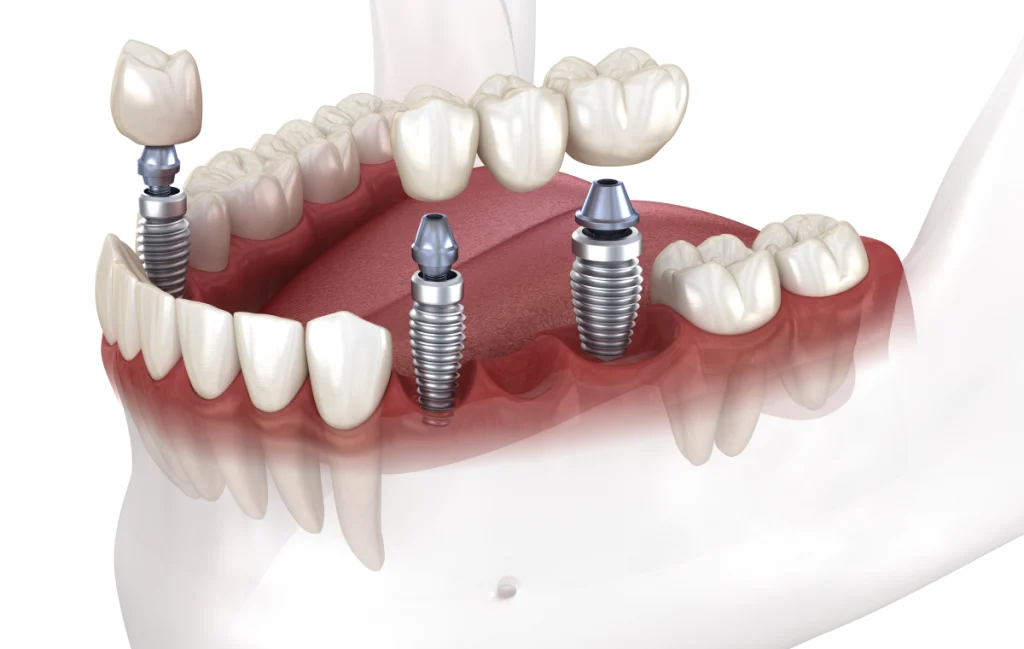
Aesthetic integration is a central element of single tooth implant treatment, especially when it concerns a visible tooth. The crown is custom-designed to harmonize with the shade, shape, and position of adjacent natural teeth. Respect for the gingival contour also plays an essential role in the final result.
Rigorous planning allows for a natural emergence of the crown and preserves the balance of soft tissues. When these parameters are respected, the single tooth implant discreetly integrates into the smile and lasts over time.
Single Tooth Implant and Masticatory Function
Functionally, the single tooth implant restores effective chewing. Unlike removable devices, it is a fixed, stable, and comfortable solution for daily life. The patient thus regains sensations similar to those of a natural tooth, both during meals and speech.
The single tooth implant also contributes to a harmonious distribution of masticatory forces. This distribution protects adjacent teeth and limits excessive stress on certain areas of the dental arch, thus contributing to the overall balance of the mouth.
Maintenance and Follow-up of a Single Tooth Implant
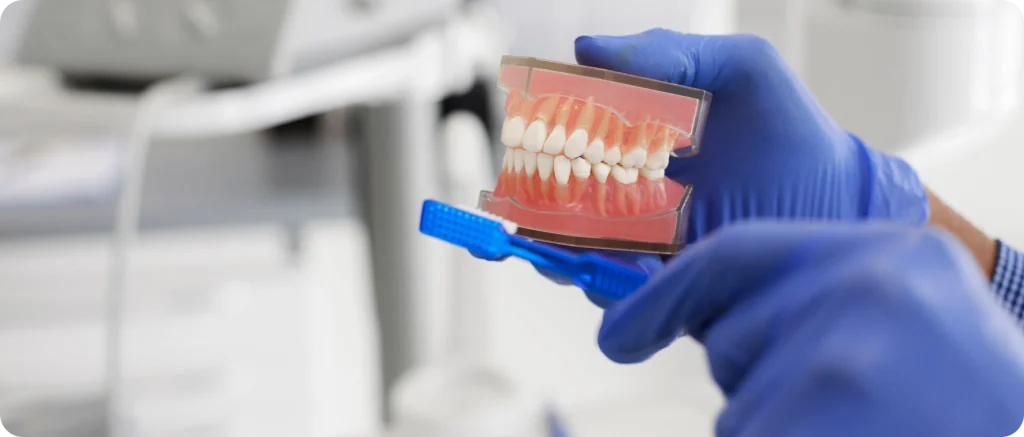
The maintenance of a single tooth implant relies on rigorous oral hygiene. Careful brushing, the use of appropriate interdental devices, and regular check-ups with the dental surgeon are essential to preserve the health of the tissues around the implant.
Follow-up also allows for checking the stability of the implant, the condition of the crown, and the balance of occlusion. These appointments are part of a preventive approach and contribute to the longevity of the treatment.
Factors Influencing the Success of a Single Tooth Implant
The success of a single tooth implant depends on several factors. Bone quality, precision of placement, and adherence to post-operative instructions play an important role. Patient involvement, particularly regarding hygiene and follow-up, is also a determining factor.
Certain general factors, such as smoking or certain chronic pathologies, can influence healing. A personalized evaluation helps identify these elements and adapt the treatment plan if necessary.
Single Tooth Implant and Other Dental Replacement Solutions
In certain situations, other solutions may be considered to replace a missing tooth. A bridge or a partial removable denture are among the possible alternatives, depending on the condition of adjacent teeth and anatomical constraints.
The choice of solution is based on a global analysis of the clinical situation and the patient’s expectations. The objective remains to offer a functional, durable, and adapted restoration for each case.
FAQ about Single Tooth Implants
• What is a single tooth implant?
It is an artificial root inserted into the bone to replace a missing tooth, onto which a crown is fixed.
• Is the placement of a single tooth implant painful?
The procedure is performed under local anesthesia. The after-effects are generally moderate and temporary.
• How long does single tooth implant treatment take?
The duration mainly depends on the bone healing time, which can vary among patients.
• Does a single tooth implant require special maintenance?
It requires rigorous oral hygiene and regular check-ups.
• Can everyone benefit from a single tooth implant?
A clinical evaluation is essential to check bone quality and the general condition of the mouth.
Book your appointment at the Dental Practice of Drs. Payam and Pegah Gandjizadeh in Cagnes-sur-Mer
For anyone wishing to replace a missing tooth in a stable and functional way, a single tooth implant can be a suitable option when correctly indicated. A consultation allows for evaluating the situation, answering questions, and defining a personalized treatment plan. To learn more, it is possible to book an appointment online with the dental practice of Doctors Payam and Pegah Gandjizadeh in Cagnes-sur-Mer to discuss your treatment plan calmly.