

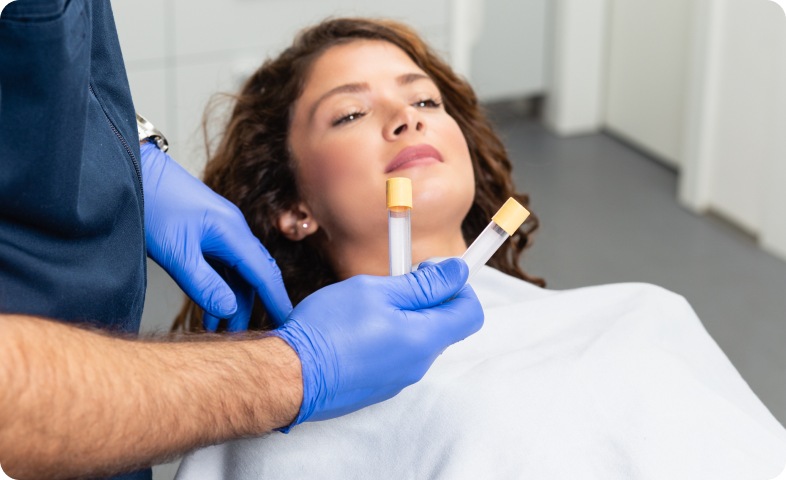
PRF, an abbreviation for Platelet Rich Fibrin, is a biomaterial derived from the patient’s blood. In dental surgery, it is used as a biological support during certain surgical procedures. Its objective is to assist the body’s natural healing mechanisms, without the addition of external substances.
Le PRF repose sur un principe simple : utiliser les capacités biologiques propres au corps pour favoriser la réparation des tissus après une intervention.
Qu’est-ce que le PRF en dentisterie ?
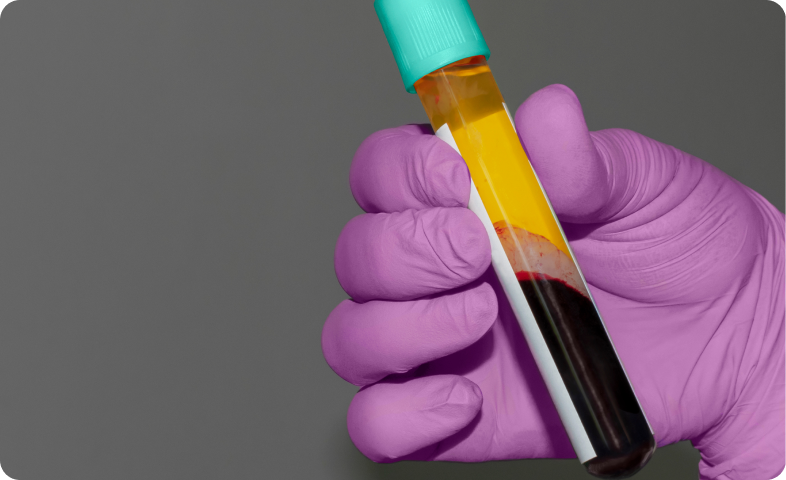
PRF is a blood concentrate obtained from a sample taken from the patient just before the procedure. After centrifugation, the blood naturally separates into different layers. The part used corresponds to a fibrin matrix containing platelets and cells involved in healing.
This matrix forms a natural, flexible, and resorbable support that can be placed directly on the operated area. PRF is entirely autologous, meaning it comes exclusively from the patient themselves.
How PRF is prepared
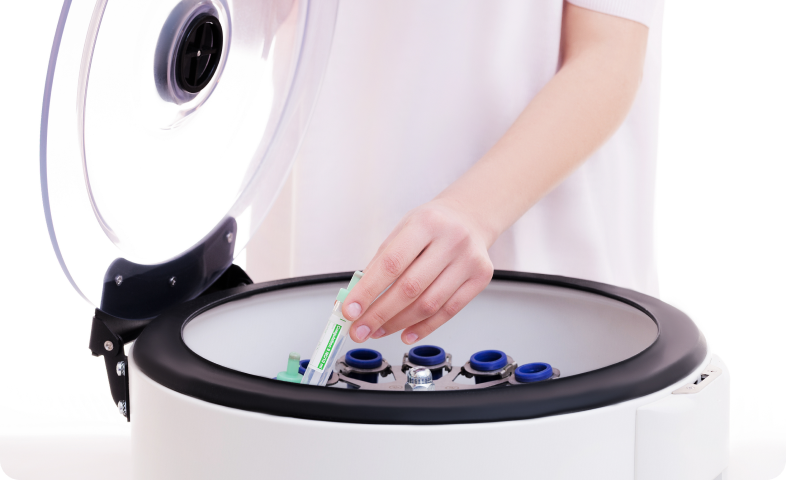
PRF preparation is carried out directly at the dental practice. It begins with a standard blood draw, performed under strict aseptic conditions. The sample is then placed in a centrifuge for a determined period.
This step allows for the creation of stable and usable fibrin. Once centrifugation is complete, the practitioner retrieves the PRF in the form of a membrane or clot. This is used immediately, without further processing, which guarantees its freshness and biological integrity.
In what contexts can PRF be used?
PRF can be integrated into various dental surgical procedures. Its use always depends on the prior clinical evaluation. It is never systematic but considered when the situation is appropriate.
PRF after tooth extraction
After an extraction, PRF can be placed in the socket left by the removed tooth. It then acts as a temporary biological support. This approach aims to assist tissue healing and protect the operated area during the first few days. The practitioner adapts this use based on the complexity of the extraction and the local tissue condition.
PRF in implant surgery
In certain implant protocols, PRF can be used around the implant site. It can contribute to soft tissue management and support the early phases of healing. The use of PRF is part of a comprehensive approach defined during the treatment plan. Each situation is evaluated individually to determine the benefit of its use.
PRF in periodontal surgery
PRF can also be used in certain periodontal surgeries, particularly when gingival tissues require specific support. Its fibrinous structure helps stabilize the operated area locally. Post-operative follow-up remains essential to observe healing progression and adjust care if necessary.
Biological role of PRF in healing
PRF primarily acts as a natural matrix. This three-dimensional structure promotes the organization of cells involved in tissue repair. The platelets present in the fibrin gradually release elements naturally contained in the blood.
These mechanisms are part of the different physiological phases of healing. PRF does not artificially accelerate the process but creates a local environment favorable to its natural progression.
PRF and patient safety
PRF is prepared from the patient’s blood, without the addition of chemicals or external substances. This characteristic limits the risks of reactions related to foreign material.
As with any medical procedure, its use adheres to precise protocols and strict hygiene rules. The patient receives clear explanations before the procedure, allowing them to understand the course of treatment and ask questions with confidence.
Course of treatment incorporating PRF
Care always begins with a preliminary consultation. The dental surgeon assesses the clinical situation and determines if PRF can be considered. On the day of the procedure, the blood sample is taken just before the surgical act. Once the PRF is prepared, it is used directly on the affected area.
After the procedure, recommendations are given to the patient to promote optimal healing. Follow-up appointments may be scheduled to ensure proper monitoring.
Frequently asked questions about PRF
- Is PRF preparation painful?
The blood draw is comparable to a standard blood test and generally causes only mild and temporary discomfort. - Does PRF replace usual care?
No, PRF is part of comprehensive care and does not substitute for treatment or post-operative follow-up. - Is PRF used systematically?
No, its use depends on the clinical indication and the practitioner’s evaluation. - Does PRF remain in the mouth?
PRF is resorbable. It degrades naturally over time without further intervention. - Is PRF suitable for all patients?
Each situation is evaluated individually. The practitioner checks for any contraindications before use.
Book your appointment at the Dental Practice of Drs. Payam and Pegah Gandjizadeh in Cagnes-sur-Mer
For any questions or to find out if PRF can be considered for your situation, the team at the Dental Practice of Doctors Payam and Pegah Gandjizadeh in Cagnes-sur-Mer welcomes you and provides information during a personalized consultation. You can book an appointment online now to discuss with the practitioner and receive care tailored to your situation.