

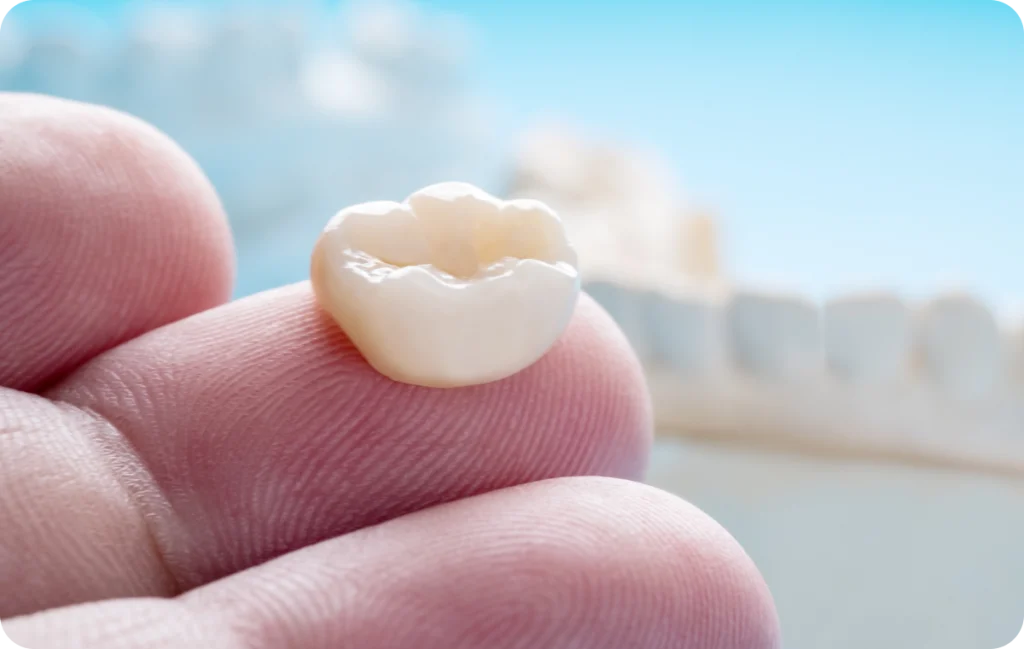
Dental crowns are among the commonly used solutions in dental practice to restore a tooth whose structure is too weakened to be durably preserved by a simple filling.
When a tooth has lost a significant portion of its substance, it becomes more vulnerable to chewing forces. The crown then allows it to be fully covered to restore an appropriate shape, correct function, and long-term protection.
What is a Dental Crown?
A dental crown is a fixed prosthesis designed to completely cover a damaged tooth. It is custom-made to precisely fit the prepared tooth and integrate harmoniously with the rest of the dentition.
Unlike partial restorations, the crown envelops the tooth over its entire visible height. It is permanently cemented and cannot be removed by the patient. Its primary objective is to restore the tooth’s strength while preserving its functional role.
Why Get a Crown?
The placement of a crown is considered when the tooth can no longer properly perform its function without additional protection. Several situations can lead to this indication. An extensive cavity, for example, weakens the tooth even after treatment. Similarly, a tooth that has undergone endodontic treatment becomes more vulnerable to fractures.
A crack, significant wear, or a partial fracture can also justify the placement of a crown.
Functional Objectives of Crowns
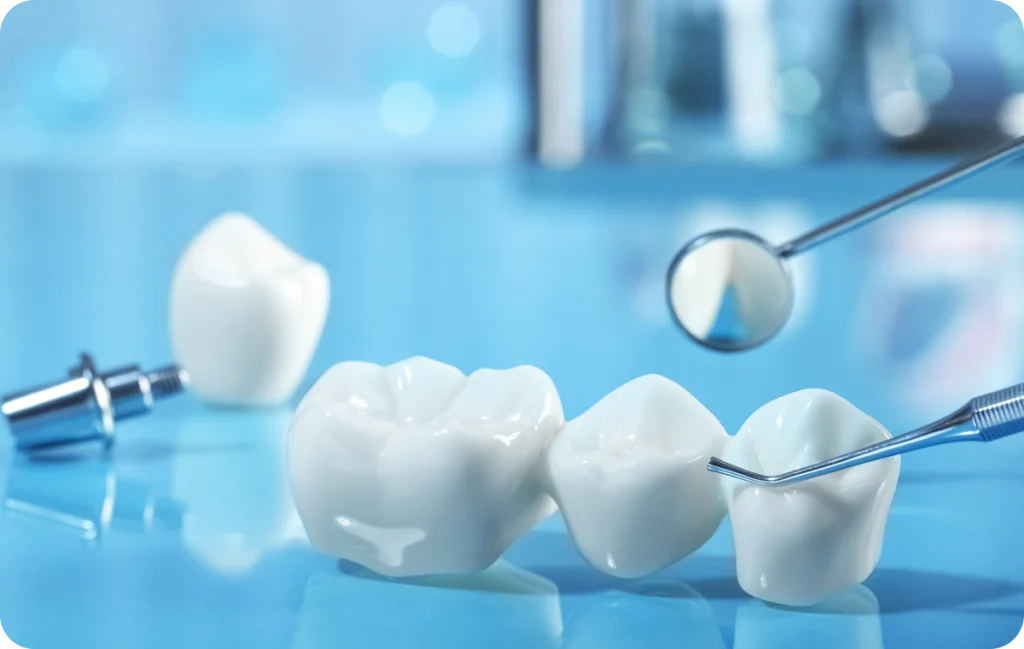
Crowns play an essential role in masticatory function. By covering the tooth, they allow for better distribution of forces exerted during chewing. This limits the risk of cracks or fractures. They also contribute to maintaining tooth alignment and occlusal stability.
A weakened tooth that is not restored can lead to imbalances, with repercussions on neighboring or opposing teeth. The crown thus contributes to the overall balance of the mouth.
Different Materials Used for Crowns
Several types of materials are available for dental crowns. The choice depends on the tooth’s location, mechanical constraints, and clinical characteristics observed during the examination.
All-Ceramic Crowns
All-ceramic crowns are often used for visible teeth. They offer an aesthetic result close to that of natural teeth, thanks to their light-transmitting properties. Their aesthetic adaptation allows for discreet integration into the smile. However, they require precise preparation to ensure their long-term resistance.
Porcelain-Fused-to-Metal Crowns
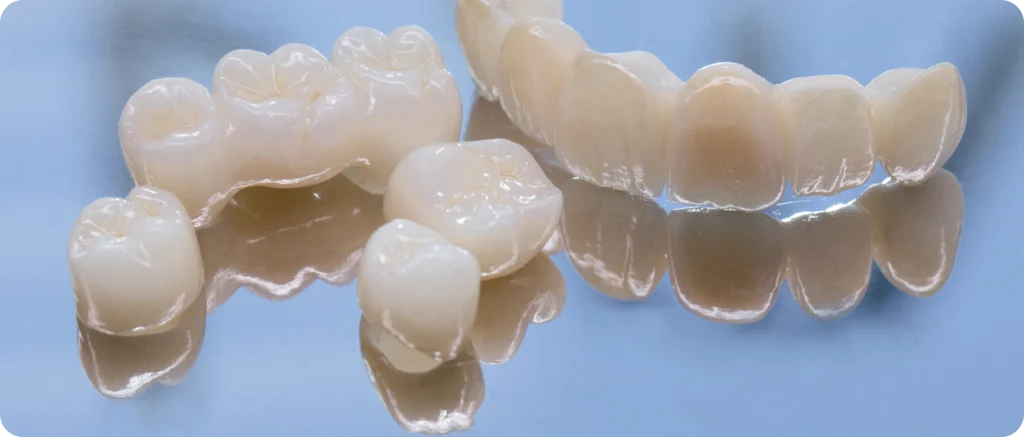
Porcelain-fused-to-metal crowns combine an internal metal framework with a ceramic coating. This combination provides good resistance to chewing forces while maintaining an appearance close to that of natural teeth. They are frequently used for posterior teeth, which are subjected to greater chewing stress.
Metal Crowns
Metal crowns, often reserved for non-visible posterior areas, offer durable strength. Their thinness sometimes allows for the preservation of more tooth structure during preparation. They are generally well-tolerated and have a satisfactory longevity when properly maintained.
Steps for Crown Placement
The placement of a crown involves several distinct steps. During the first appointment, the tooth is prepared to remove weakened tissues and create a shape suitable for the future crown. An impression is then taken to allow for the fabrication of a custom-made prosthesis. In the interim, a temporary crown is often placed to protect the tooth and maintain patient comfort.
During the second appointment, the definitive crown is tried on, adjusted if necessary, and then permanently cemented.
The Adaptation Phase After Placement
After a crown is placed, an adaptation period may be necessary. Slight sensitivity to cold or pressure may appear in the days following. These sensations are generally transient. If discomfort persists during chewing, an adjustment can be made to improve comfort. Proper adaptation is essential to avoid overloading and preserve occlusal balance.
Daily Crown Maintenance
Even if the crown itself cannot decay, the supporting tooth and surrounding tissues remain susceptible to bacteria. Rigorous oral hygiene is therefore essential.
Regular brushing, combined with the use of dental floss or interdental brushes, effectively cleans the junction areas between the crown and the tooth. Regular check-ups help monitor the condition of the restoration and supporting tissues.
Lifespan of Crowns
The lifespan of a crown depends on several factors. Good oral hygiene, regular check-ups, and appropriate habits contribute to its longevity. Stresses on the tooth, such as bruxism, can also influence its long-term stability. Regular monitoring allows for early detection of any anomaly and intervention if necessary.
Crowns and Oral Health Balance
Crowns contribute to the stability of the dental arch. By restoring a weakened tooth, they limit the risk of tooth displacement and occlusal imbalances. They also contribute to chewing comfort, which promotes a more varied diet and a better quality of life. Their role is thus part of a global approach to oral health.
FAQ – Frequently Asked Questions About Crowns
- Is crown placement painful?
The procedure is performed under local anesthesia. Sensations after placement are generally moderate and temporary. - How many appointments are necessary?
Crown fabrication usually requires two appointments, sometimes spaced a few weeks apart. - Can I eat normally with a crown?
After the adaptation phase, chewing is comfortable and natural. - Can a crown come loose?
Dislodgement is possible but infrequent. Regular monitoring helps verify stability. - Does a crown need to be replaced after a certain time?
Replacement depends on the condition of the crown and the supporting tooth. A clinical evaluation determines this.
Book your appointment at the Dental Practice of Drs. Payam and Pegah Gandjizadeh in Cagnes-sur-Mer
At the dental practice of Doctors Payam and Pegah Gandjizadeh in Cagnes-sur-Mer, crown management is based on a careful and individualized assessment of each situation. For any questions or to consider a treatment adapted to your oral health, you can make an appointment online for a calm consultation.