

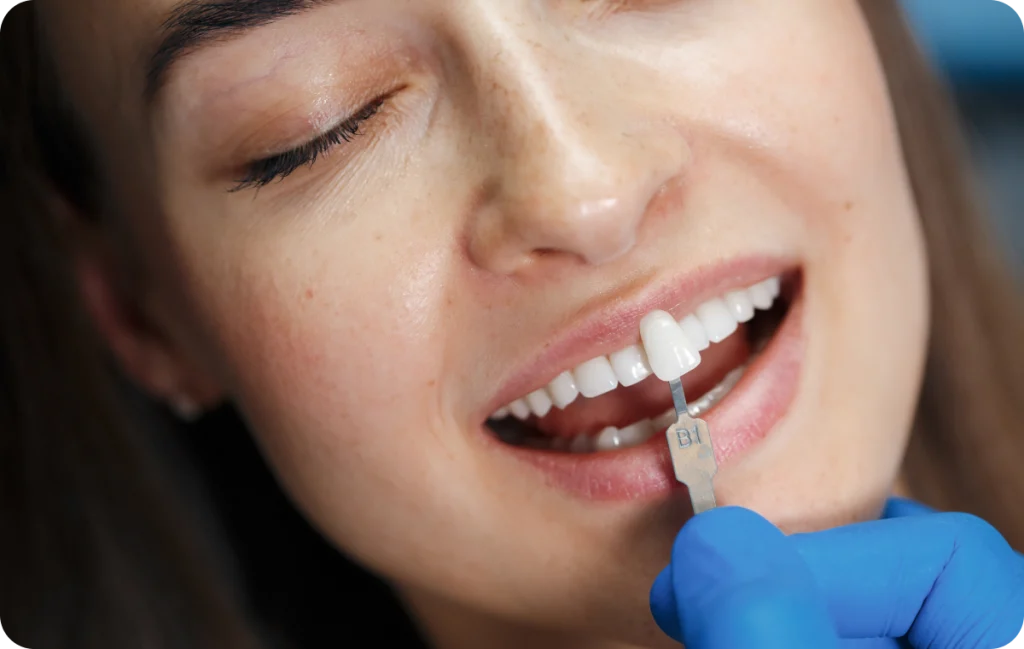
Dental veneers are thin, custom-made shells, typically made of ceramic or composite, that are bonded to the visible surface of a tooth. They allow for modification of a tooth’s appearance by addressing its shade, shape, length, or certain minor irregularities.
This treatment is part of a measured approach, aimed at improving the harmony of the smile while respecting the existing tooth structure.
Unlike a crown, the veneer does not cover the entire tooth: it integrates with the external surface, which allows preservation of a large portion of the natural tooth when the indication is properly established.
Dental Veneers: Objectives and General Principles
Dental veneer treatment primarily addresses a request for smile harmonization. It is not about radically transforming the dentition, but rather correcting imbalances perceived by the patient. A tooth may appear too short, slightly worn, stained, or disproportionate compared to others. In these situations, the veneer allows for rebalancing the overall appearance in a discreet and progressive manner.
The practitioner considers numerous factors before proposing this treatment: the condition of the teeth and gums, the way the teeth meet, facial morphology, and expressed expectations. The objective remains to achieve a natural result that is coherent and compatible with masticatory function.
In Which Cases Can a Dental Veneer Be Considered
A dental veneer may be indicated in several situations, provided that the tooth in question is healthy or properly stabilized. It may be considered to mask persistent discolorations that do not respond to appropriate whitening solutions offered at the clinic.
It can also correct a slightly chipped, worn, or irregular tooth when the loss of substance remains moderate.
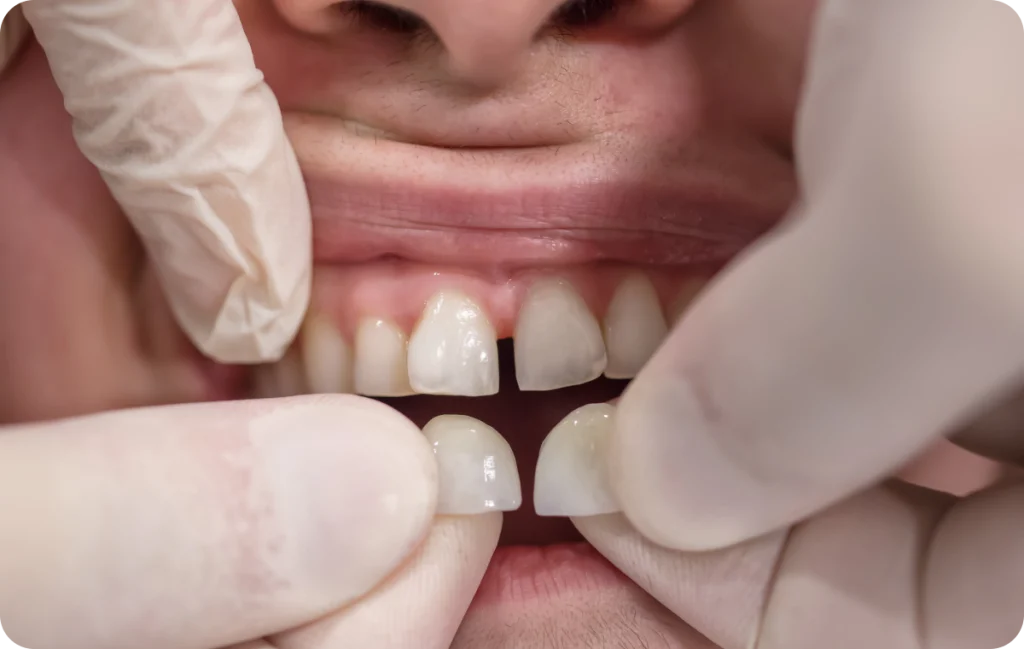
In certain cases, the veneer can visually reduce a small gap between two teeth or minimize the effect of slight misalignment. However, when the alignment problem is more pronounced, orthodontic treatment often constitutes a more coherent solution. Similarly, a tooth affected by significant decay, structural fragility, or active gingival inflammation requires preliminary treatment before any aesthetic consideration.
The Importance of Oral Health Before Placement
Before placing a dental veneer, the practitioner systematically verifies the overall health of the mouth. The gums must be healthy and stable, as their condition directly influences the aesthetics and durability of the treatment. Gingival inflammation can alter the contour of the veneer and complicate its maintenance.
Occlusion, that is, the way the teeth meet, is also subject to careful analysis. A veneer must withstand masticatory forces without excessive stress. If the patient clenches or grinds their teeth, this point is taken into account from the planning phase in order to adapt the care.
Main Types of Dental Veneers
There are two main categories of dental veneers, the choice of which depends on the clinical situation and the patient’s objectives.
Ceramic Dental Veneer
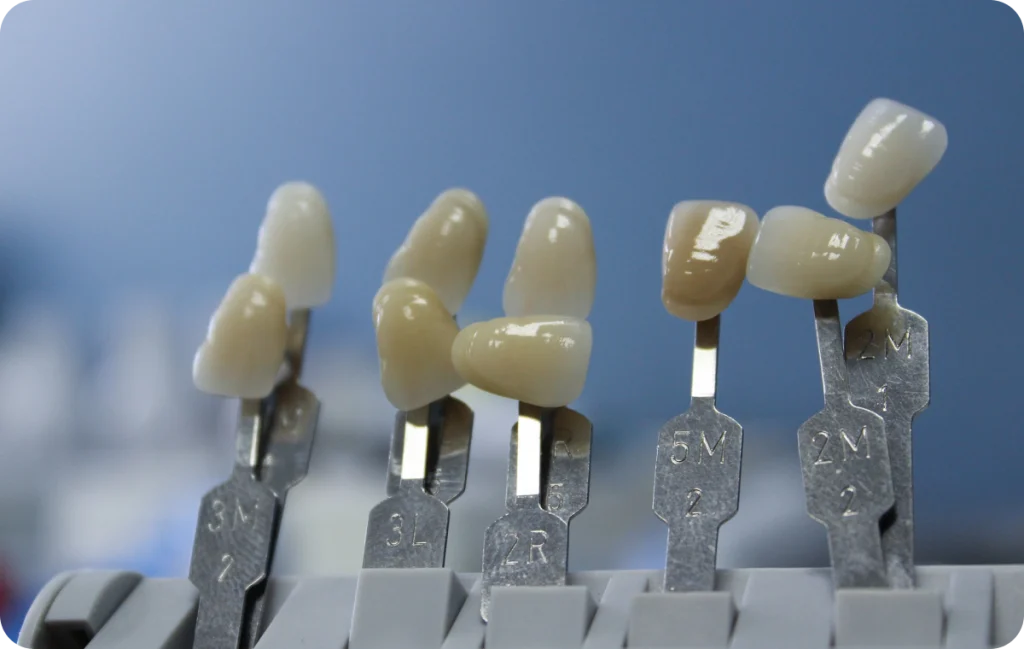
The ceramic veneer is designed in a laboratory from precise impressions, often digital. It is distinguished by a finish close to natural enamel and good color stability over time. Ceramic allows for a play of transparency and light that promotes discreet integration with the existing smile.
This type of veneer requires several steps and rigorous planning. The practitioner works closely with the laboratory to obtain a shape and shade adapted to each situation.
Composite Dental Veneer
The composite veneer is created directly at the clinic, in the dental chair. The practitioner applies the material in successive layers, which are carefully shaped and polished. This solution may be suitable for limited corrections, such as a chip, moderate wear, or slight asymmetry.
Composite allows for a faster intervention, but it may require more regular maintenance. Over time, it may be more sensitive to staining related to dietary habits and lifestyle.
Dental Veneer Treatment Process
Dental veneer treatment follows a structured protocol, designed to ensure comfort, understanding, and safety throughout the care process.
Consultation and Treatment Plan
The first step is based on an in-depth discussion. The practitioner listens to the patient’s expectations, examines the dentition, and explains the various possible options. This phase allows for the definition of a realistic treatment plan adapted to the situation. Visual aids or simulations may be offered to facilitate visualization.
Tooth Preparation
Depending on the case, slight preparation of the tooth may be necessary to create the required space for the veneer. This preparation remains measured and aims to preserve the tooth structure as much as possible. In certain situations, it is very limited or even nonexistent, but this always depends on the selected indication. Local anesthesia may be offered to ensure comfort, particularly for anxious patients.
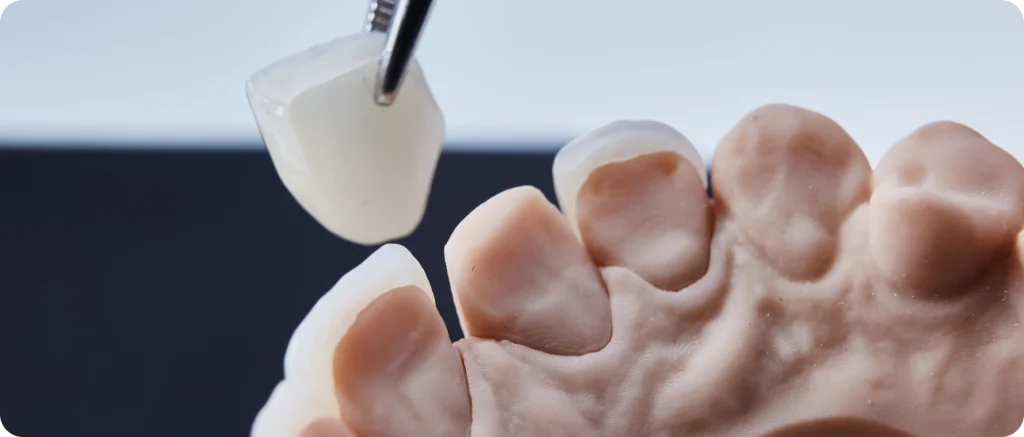
Impression and Fabrication
For a ceramic veneer, the practitioner takes a precise impression, often digital, which serves as the basis for laboratory fabrication. A temporary veneer may be placed to protect the tooth and maintain aesthetics during this phase.
Placement and Adjustments
During the placement session, the practitioner verifies the veneer’s fit, shade, and integration into the smile. Adjustments are made if necessary before final bonding. Bonding follows a rigorous protocol to ensure stable and durable fixation.
Occlusion Control
Once the veneer is placed, the practitioner checks the contacts between the teeth to ensure they are balanced. This step contributes to the longevity of the treatment and patient comfort.
Sensations After Dental Veneer Placement
After placement, slight sensitivity to cold may appear, particularly when the tooth has been prepared. This sensation is generally temporary. Some patients also experience a different sensation when closing their teeth, while the mouth adapts.
In case of persistent discomfort or difficulty during chewing, a follow-up appointment allows for necessary adjustments.
Limitations and Precautions to Know
The dental veneer does not replace essential oral health care. It does not treat active decay, gingival disease, or functional disorders. It requires rigorous hygiene and regular follow-up.
Certain habits, such as teeth grinding, repeated chewing of very hard foods, or using teeth to open objects, can weaken the veneer. In these situations, protective solutions may be offered to preserve the treatment.
Daily Maintenance of a Dental Veneer
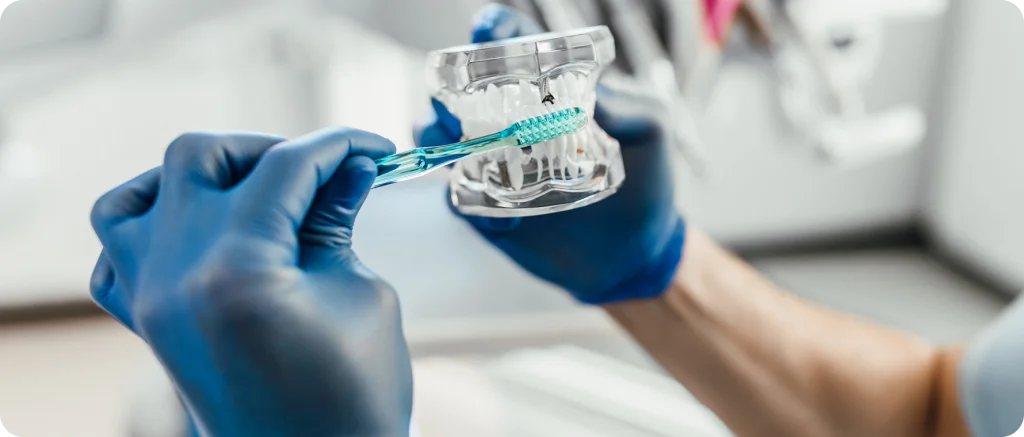
Maintenance is based on simple and regular practices. Careful brushing twice a day, use of interdental cleaning methods, and regular check-ups at the clinic contribute to the stability of the result. Particular attention to the gums helps maintain a harmonious contour around the veneer.
FAQ on Dental Veneers
- Is dental veneer placement painful?
Placement is generally performed under local anesthesia when necessary. Sensations after the procedure usually remain mild and temporary. - How many appointments are necessary?
The number of appointments depends on the type of veneer chosen. A composite veneer can be completed in one session, while a ceramic veneer typically requires two to three appointments. - Can you eat normally with a dental veneer?
After a brief adaptation period, chewing becomes comfortable and natural again. It is simply recommended to avoid very hard foods in the first few days. - Can a dental veneer become detached?
Detachment is possible but remains infrequent when indications and protocol are respected. Regular follow-up allows for monitoring the veneer’s stability. - Does a dental veneer need to be replaced after a certain time?
Replacement depends on the condition of the veneer and the supporting tooth. A clinical evaluation allows for assessment and adaptation of care if necessary.
Schedule an Appointment to Discuss Dental Veneer Treatment
If you would like to know whether this treatment is appropriate for your situation, a personalized consultation is essential. At the Dental Office of Doctors Payam and Pegah Gandjizadeh in Cagnes-sur-Mer, you can schedule an appointment online to ask your questions, discuss your expectations, and receive appropriate guidance in a reassuring and attentive environment.